

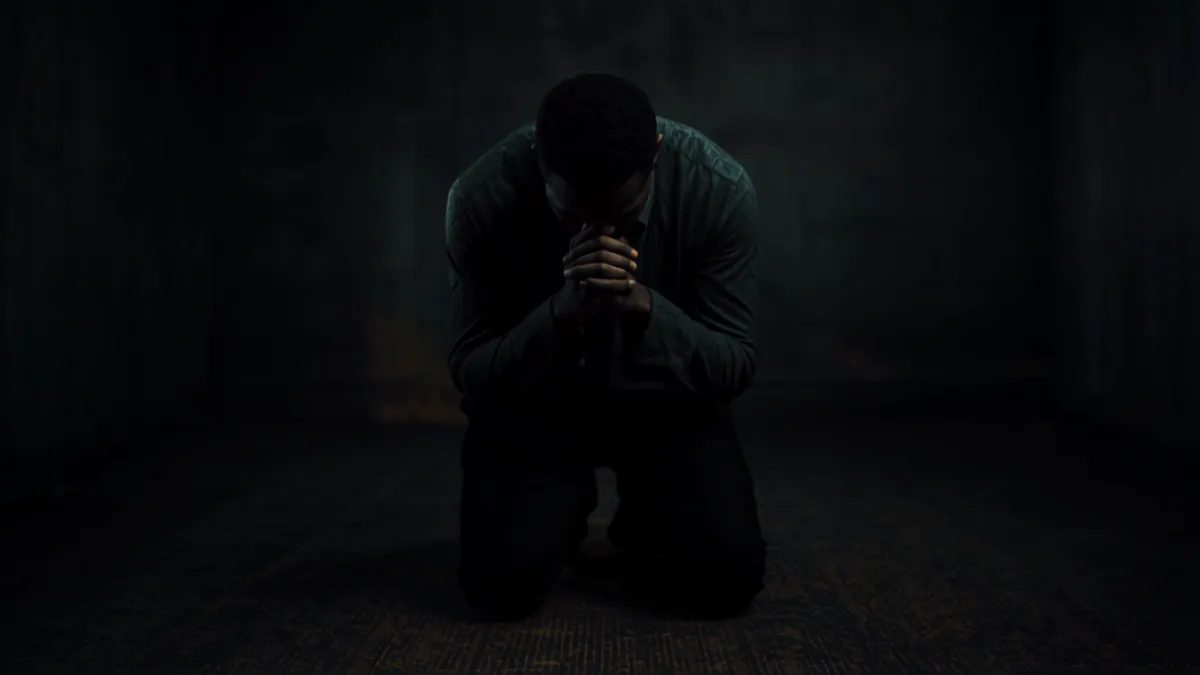
Out of the Press: The Real Cost of a God-Given Dream
We love the mountaintop moments of a calling—the clarity of the initial vision, the thrill of the promise, and the final victory. But we rarely talk about the crushing darkness of the middle. There comes a point on every spiritual journey where the pain of the process begins to outweigh the excitement of the start. You feel exhausted, unseen, and completely ready to give up.
If you are standing in that painful gap right now, take heart: the pain isn’t proof that you missed God; it is proof that the dream is being refined. By processing this heartbreak through the “Dare to Dream” model—The Spark, The Struggle, The Stakes, and The Shift—we can see why enduring the press is the only way to release the promise.
1. The Spark: The Weight of the Divine Burden
Every God-given dream begins as The Spark—a holy unrest or a burning vision dropped into your spirit.
Consider the prophet Jeremiah. God called him to speak tough truths to a rebellious nation. It wasn’t a glamorous dream; it was a heavy burden. When the rejection and isolation became overwhelming, Jeremiah actually tried to quit. He resolved to stop speaking in God’s name.
When you receive a true spark from God, your soul experiences a profound spiritual reality:
The Hebrew Perspective: The Old Testament describes this compelling inner drive using the wordmassa(מַשָּׂא). It literally translates as “burden” or “heavy load,” but it is specifically used to describe a prophetic oracle or divine message. A God-given dream is amassa—a weight you cannot simply drop when things get tough.
The Fire Confined: Jeremiah discovered this when he tried to walk away: “But if I say, ‘I will not mention his word or speak anymore in his name,’ his word is in my heart like a fire, a fire shut up in my bones. I am weary of holding it in; indeed, I cannot” (Jeremiah 20:9). The spark persists because it is sustained by God’s energy, not your own.
2. The Struggle: The Painful Pressing of the Winepress
When the initial excitement fades, you enter The Struggle. This is the season where the process hurts so deeply that giving up feels like the only logical choice.
Look at Jesus in the Garden of Gethsemane. He carried the ultimate God-given dream—the redemption of humanity. Yet, the night before the crucifixion, the emotional and spiritual weight was agonizing. Luke 22:44 records that Jesus, “being in agony,” prayed more earnestly, “and his sweat became like great drops of blood falling down to the ground.”
The New Testament illuminates this crushing environment using two powerful Greek concepts:
Thlipsis (θλίψις):This word translates to “tribulation,” “affliction,” or “distress.” Literally, it means “crushing pressure” or “binding tight.” It is the exact word used for a winepress squeezing grapes until the juice flows out.
Adēmonia (ἀδημονία):From the verbadēmoneō, used to describe Jesus’ emotional state in the garden, this word means to be “deeply distressed,” “heavy,” or “overwhelmed with anguish.”
When you feel thlipsis and Adēmonia, it feels like defeat. But structurally, God is using the pressure to extract the finest oil and wine from your life. Gethsemane literally means “oil press.” The pain of the press is what prepares the anointing.
3. The Stakes: Fighting for the Legacy on the Line
When you are on the verge of quitting, The Stakes remind you exactly why you must keep moving. Giving up doesn’t just abort your comfort; it alters the future of everyone attached to your obedience.
Consider Esther. She found herself in a deadly political environment, terrified for her life. To pursue the dream of saving her people meant walking into the king’s court uninvited—an act punishable by death. She was paralyzed by fear.
Her cousin Mordecai reminded her of the massive stakes on the line, using language that speaks directly to our moments of wanting to quit:
The Call to Action:“For if you remain silent at this time, relief and deliverance for the Jews will arise from another place, but you and your father’s family will perish. And who knows but that you have come to your royal position for such a time as this?” (Esther 4:14).
The Hebrew Perspective:The phrase “remain silent” comes fromcharash(חָרַשׁ), which means to hold one’s peace, to be deaf, or to keep quiet. Mordecai warned her that choosing the safety of silence over the pain of her calling would cost her legacy. When the stakes are eternal, quitting is a luxury you cannot afford. Esther accepted the stakes, declaring, “If I perish, I perish.”
4. The Shift: The Birth of Incorruptible Glory
The final stage of the model is The Shift—the moment where the pain yields its purpose, transforming both the dreamer and the world around them. Jesus endured the cross, and the shift brought salvation to humanity. Esther risked her life, and the shift brought deliverance to an entire nation.
When you refuse to give up during the thlipsis(the crushing pressure), a supernatural transformation takes place inside your character.
The Greek Perspective: The Apostle Paul unpacks this shift using the wordkatergazomai(κατεργάζομαι), which means “to work out,” “to produce,” or “to bring about through labor.”
The Eternal Weight: Paul writes, “For our light and momentary troubles [thlipsis] are achieving [katergazomai] for us an eternal glory that far outweighs them all” (2 Corinthians 4:17).
The shift reveals that the pain wasn’t trying to destroy you; it was actively manufacturing an eternal weight of glory within you. You emerge from the process secure, resilient, and utterly unshakeable.
The Dare: Do Not Faint in the Press
If you are sitting in your own personal Gethsemane tonight, looking at a God-given dream that feels too painful to pursue, do not drop your massa. The crushing you feel is not the end of your story; it is the pressing of the wine.
Dare to keep dreaming when it hurts, because the One who placed the fire in your bones is entirely faithful to bring it to pass.
